
Fort Lauderdale King Tides: When They Occur & What to Know
Fort Lauderdale’s waterfront lifestyle is shaped by its canals, Intracoastal Waterway, and connection to the ocean. During king tides, unusually high water levels can temporarily affect some streets, docks, and waterfront areas.
Understanding when king tides occur—and how to prepare—helps residents, boaters, and waterfront property owners plan ahead.
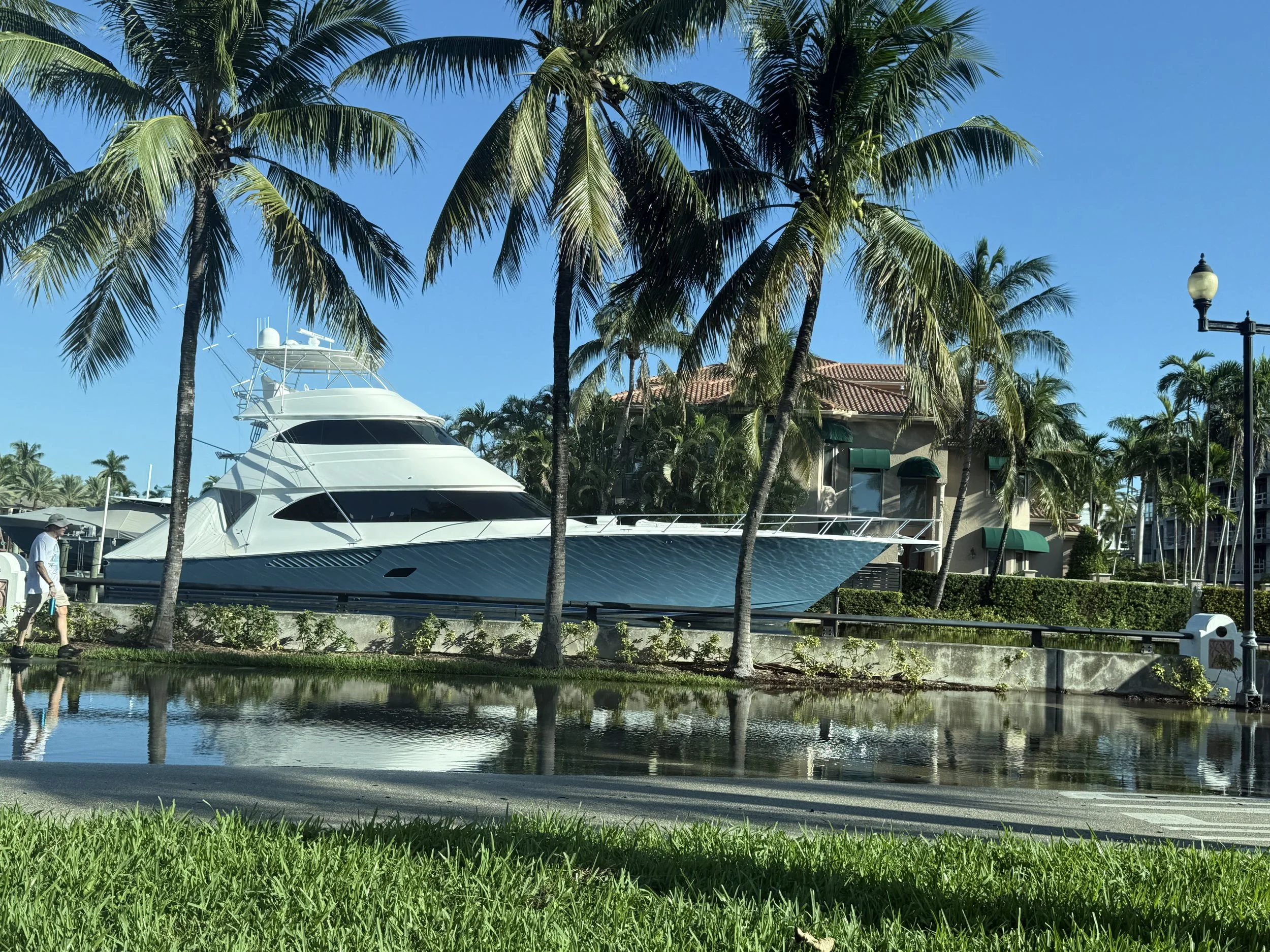
Waterfront living in Fort Lauderdale, yacht docked off Las Olas Blvd during a king tide.
What Are King Tides?
King tides are exceptionally high tides that occur when the gravitational effects of the moon and sun align with seasonal factors that influence ocean levels. They happen naturally and are predictable, although local water levels can also be affected by wind, weather, and other conditions.
King tides are not the same as storm surge, which is driven by weather systems.
When Do King Tides Occur in Fort Lauderdale?
King tides typically occur during the fall, especially between September and November, although unusually high tides can occur at other times of the year.
2026 Fort Lauderdale King Tide Dates
The City of Fort Lauderdale publishes predicted king tide periods based on NOAA tide predictions. For 2026, the scheduled periods are:
September 10–13
September 26–October 1
October 7–13
October 24–31
November 5–11
November 22–28
December 24–25
Before heading out, check the latest forecasts:
This schedule is updated annually. Check official sources for the latest predictions.
How Fort Lauderdale Is Preparing for Rising Tides
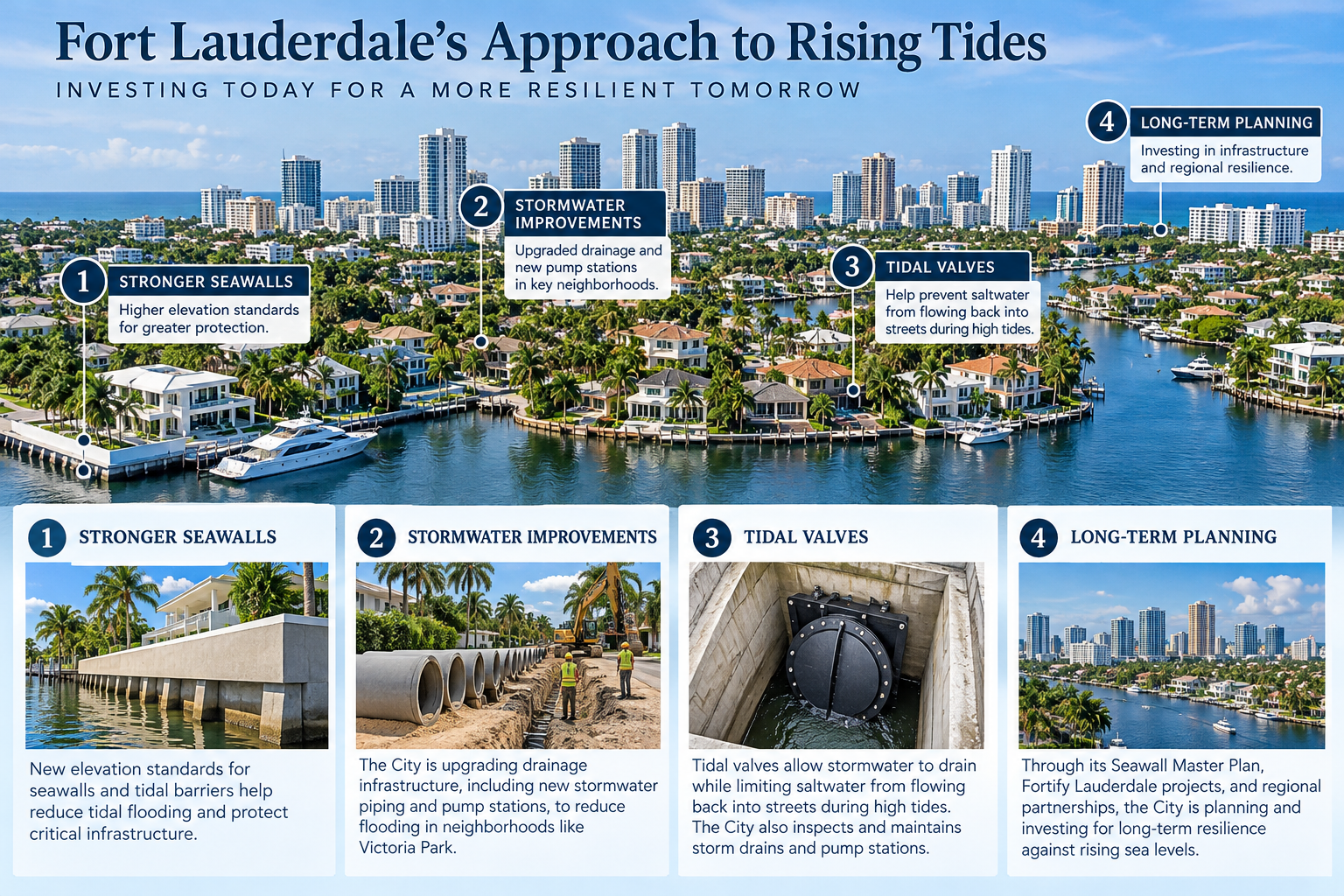
Fort Lauderdale's approach to coastal resilience. The City is investing in seawall improvements, stormwater infrastructure, tidal controls, and long-term planning to help reduce flooding and prepare for rising sea levels. These measures can reduce risk, but no single solution eliminates flooding.
Seawall standards: City requirements address seawall height and coastal protection, subject to applicable regulations and exceptions.
Stormwater improvements: Infrastructure projects aim to improve drainage and manage water in vulnerable areas.
Tidal controls and long-term planning: Tidal valves and resilience planning help the City address saltwater intrusion, drainage challenges, and future sea-level rise.
These measures are part of a broader approach to coastal resilience. They can help reduce risk, but no single measure eliminates flooding.
Learn more from the official sources:
Tips for King Tide Season
A few simple habits can help you plan around exceptionally high tides:
Check tide predictions and local weather before heading out.
Allow extra time if your route includes low-lying streets.
Avoid driving through standing floodwater.
Keep an eye on dock access and changing water levels around your property.
If water covers your usual route, consider waiting until it recedes or choosing another route.
And if you drive a prized sports car, check the street before heading out. Sometimes, waiting a few hours for the water to recede is all it takes to get back on the road.
Boaters, check tide predictions and bridge clearances, particularly when navigating fixed bridges.
Waterfront Living Is Better With Local Knowledge
King tides are a natural part of life in coastal South Florida. They don't mean you need to change your plans every time a high tide is forecast. They simply remind us that waterfront living comes with a few unique considerations.
Know the forecast, understand your surroundings, and plan accordingly.
About Bryan Hayes
Bryan Hayes is a Fort Lauderdale real estate advisor with Fidelity Real Estate LLC, Las Olas, specializing in waterfront homes, yacht-capable properties, and the unique considerations of owning real estate on the water.
Learn more at bryanhayes.com.
